About General Contractors of Amarillo
General Contractors of Amarillo
General Contractors of Amarillo builds commercial and industrial work on the high plains, and we start every conversation with the same two questions: what will it cost, and what could the weather do to it. Those come in that order. A number you can plan around matters first, and the wind, hail, dust and cold snaps that sit beside the number matter right after.
The weather is not a talking point here. The National Weather Service recorded a record 83 mph gust at the Amarillo airport on March 14, 2025, and blowing dust cut visibility to under a quarter mile that afternoon. Amarillo sits at about 3,662 feet and has a reputation as one of the windiest cities in the country. Hail has been declared catastrophic across Potter and Randall counties. We plan around all of it, because a roof that is not dried in or a wall that is not braced is the first thing a Panhandle storm finds.
We are a general contractor. We take a project from the first budget conversation through closeout, and we schedule, coordinate and manage the trades in between depending on the scope. Our commercial construction work covers offices, retail, medical, hospitality, education, multifamily and municipal buildings. Our industrial work covers warehouses, processing plants, metal buildings and the slabs and yards that go with them.
The Panhandle is a long way from everywhere
Amarillo is the hub of a very large plains region, and that shapes how we work. Interstate 40 runs east and west through the city, I-27 runs north and south, and U.S. Routes 60, 87, 287 and 66 all meet here. The local economic development office counts BNSF Railway access and the regional airport among the area's logistics assets. For a builder, the practical meaning is distance. Materials arrive on long hauls, the nearest ready-mix plant and the nearest crane are planning facts, and a delivery that misses its slot can cost a day or a week.
We treat those facts as scheduling inputs from the first day. When a pour depends on a concrete plant that is thirty or sixty miles from the site, the pour window gets planned around the truck cycle and the forecast, not around hope. When steel has a long lead, it gets ordered while the foundation is still being designed. Our preconstruction estimating puts these items into the budget as line items, so the owner sees them before the contract is signed instead of after.
The ground has its own opinions. Caliche layers, expansive clay and playa lakes that fill and overflow in wet years all change what a foundation and a drainage plan need to look like. In June 2023 the city was pumping six playa lakes at maximum capacity, and a stormwater project at one of them is still in design. We read those conditions before we price a site, not after we find them with a bucket and a drill rig.
What we build and who we build for
Our clients are developers, property managers, health systems, school districts, retail operators, hospitality groups, public agencies and manufacturers. The work they bring us falls into a few families, and we have organized our pages the same way so you can find the one that looks like your project.
On the commercial side we build offices and medical offices, shopping centers and restaurants, hotels, schools, self-storage, parking structures and multifamily housing. Downtown Amarillo has seen a ballpark, a hotel and conference center, a corporate headquarters and historic building conversions in recent years, and the same mix of new construction and adaptive reuse is what we price and build.
On the industrial side we build warehouses, distribution centers, cold storage, tilt-wall buildings and pre-engineered metal buildings. The Panhandle has a documented shortage of large clear-span industrial space, and that is part of why we put real effort into pre-engineered metal buildings, from the foundation design to the erection sequence in a crosswind. Manufacturing is its own subject. The region's plants make food products, industrial equipment, plastics and polymers, aerospace and defense components and packaging, and many of them keep running while the work goes on. Our page for manufacturing clients explains how we build around production, and the page on automotive and EV plant construction covers the wind, hail, clay soils and power service a vehicle or battery site must price on day one.
How a job runs
First comes the budget. We build an estimate from drawings, site conditions and current supplier input, and we write down the assumptions. We would rather give an owner a range with named risks than a single number that falls apart in the first month. Delivery method is the owner's call. We work as design-build, as construction manager at risk, or on a bid set from the owner's architect, and we explain what each choice does to cost, schedule and risk before anyone commits.
Second comes the site. Permits, utilities, grading and drainage run ahead of vertical construction, and on the Panhandle they run ahead of the weather too. Inside Amarillo city limits, commercial permits go through the Building Safety department's online system, and the approved stamped set of plans has to be on site. Special inspectors hired by the design professional check fabricated steel, concrete and masonry. The city lists the 2021 building and fire codes as adopted, effective January 2024. Electrical is less settled. The city's own pages disagree about which National Electrical Code edition applies, so we confirm the edition with Building Safety on every project before the electrical drawings are finalized, and we tell the owner what we were told. Outside the city, in unincorporated Potter and Randall counties, the platting, floodplain and drainage rules are different, and we check them with the county before we promise a schedule.
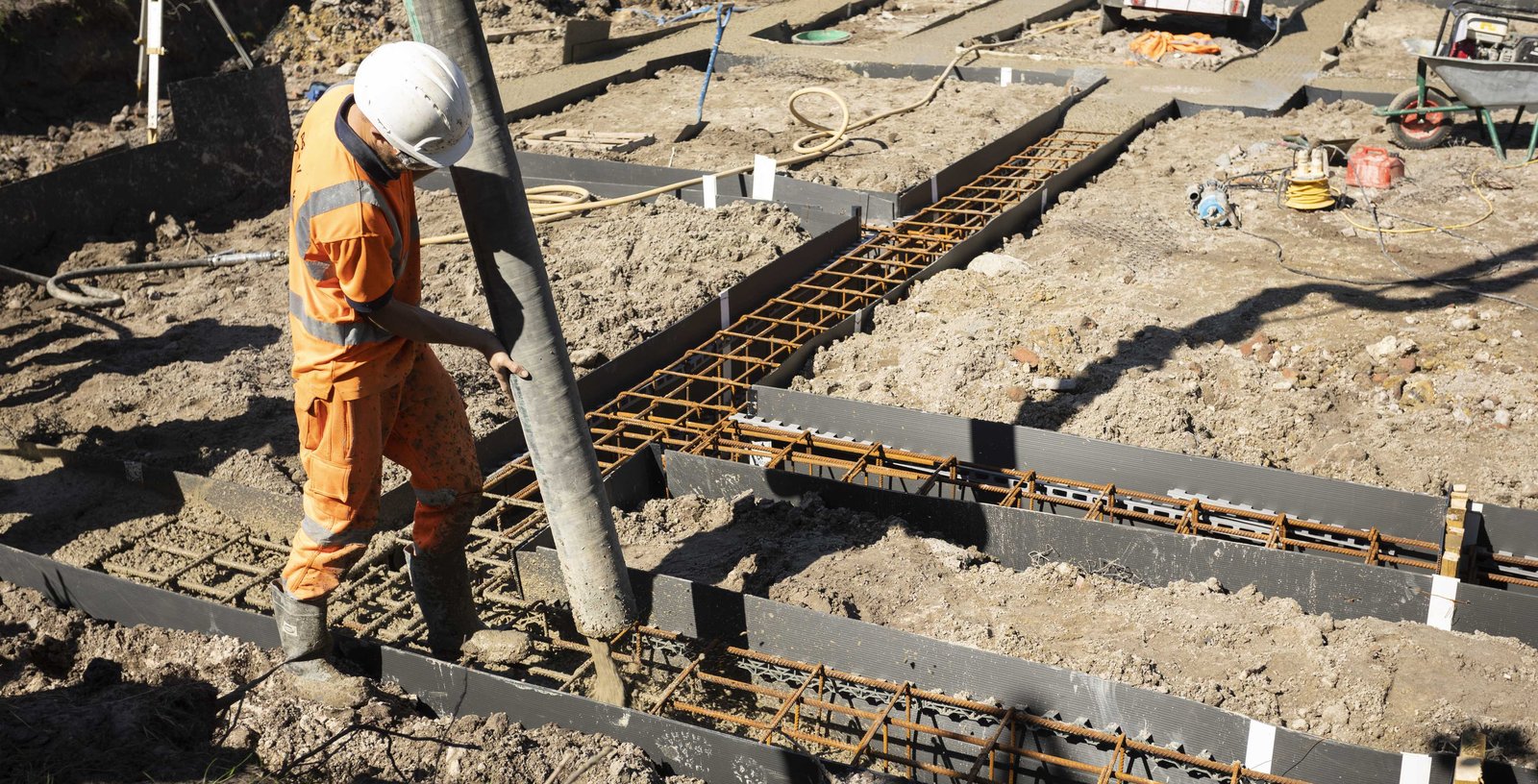
Third comes the building. We sequence structure and envelope so the building is closed against wind as early as the design allows. Crane picks are called off when the gusts say so, and we do not argue with the anemometer. Concrete is placed when the temperature and the truck schedule agree. On occupied sites we phase the work, set up separate access and keep safety rules written down, because an operating plant or a working clinic cannot stop for us.
Last comes closeout: inspections, commissioning, as-builts and a walk with the owner.
Where We Work Across the Panhandle
Our core market is Amarillo and the two counties it straddles, Potter and Randall. Within the city we work downtown, around the medical district, along the retail corridors and in the south and southwest parts of town where growth continues. Newly funded streets, water lines and the I-27 widening between Amarillo and Canyon are changing how traffic and utilities reach these areas, and we plan haul routes accordingly. Along that same highway, our page on the I-27 corridor covers the logistics sites and distribution buildings that follow the road south toward Lubbock.
West of town, Canyon is the Randall County seat and home to a state university campus where renovation and research buildings continue to be funded. East and north, the Pantex area has its own character. We do not claim access to any fenced federal facility, but the offices, warehouses, laydown space and utilities that support a large secure plant and the private campuses planned near it are ordinary commercial construction, and we price them that way.
Beyond the metro, the Panhandle is a string of towns that each have their own economy. Hereford sits among feedyards and dairies that move cattle, beef and milk on a very large scale. Dumas has schools, a hospital, a business park and a processing economy. Pampa, Borger and Stinnett have energy and industrial histories. Perryton and Dimmitt are farm and grain towns. The page on Hereford and Deaf Smith County is a good example of how we think about an agricultural market, where a building might be a feed storage structure, a shop or a processing addition, and the schedule is set by harvest and by cattle, not by the calendar.
Small communities like Wildorado sit between the interstate and the farm roads, and nearby wind farms create a steady need for operations shops and laydown yards. Our page on Wildorado operations buildings describes what that facility needs, from a door tall enough for a truck-mounted lift to an apron that does not turn to mud in March.
What we will not claim
We do not publish project counts or client lists. Ask us for a scope, a schedule logic and a list of assumptions instead.
If your project is in Amarillo or anywhere in the Panhandle, send us the drawings or just the idea. We will tell you what we think it costs, what could go wrong, and what we would do about it.
Questions Owners Ask
Does General Contractors of Amarillo build outside the city?
Yes. We work in Potter and Randall counties, along I-40 and I-27, and in Panhandle towns such as Canyon, Hereford, Dumas, Pampa, Borger and Perryton. Distance changes the plan: haul times for concrete and steel, crane availability and crew travel all go into the budget from the start.
Which building code applies to my commercial project in Amarillo?
Inside city limits the City of Amarillo lists the 2021 building and fire codes as adopted, effective January 2024, and Texas law applies the International Building Code to commercial buildings. The city's pages are inconsistent about which National Electrical Code edition applies, so we confirm that edition directly with Building Safety on each project. Unincorporated areas follow separate county rules for platting and floodplains.
How do you handle wind and weather on a job?
We plan for it in the schedule and the price. Walls and framing are braced early, crane work stops when gusts require it, and concrete is placed in a pour window that fits both the forecast and the truck cycle. The weather risks are written next to the number in our estimate.
Can you build while our facility stays open?
Yes. We phase the work, separate construction access from operations, write down site safety rules and schedule noisy or disruptive tasks with your staff. This applies to plants, clinics, schools and retail spaces that cannot close.
What delivery methods do you offer?
We work as design-build, as construction manager at risk, or as a general contractor on a bid set. We explain how each affects cost, speed and risk before you choose.
